


You open a lender’s homepage and the number jumps at you: “Personal loans from 7.99% APR.” So you run the math on your $20,000 loan, picture a payment you can live with, and feel pretty good. Then your actual offer comes back at 16%, and the cash landing in your account is $1,000 short of what you asked for. What happened? That “from 7.99%” was never your rate. It’s the floor reserved for the strongest applicants, those with a 740-plus credit score and a thick file. The missing $1,000 was an origination fee, which is typically somewhere between 1% and 12% of the loan, quietly skimmed off the top.
That’s the trap, and that’s why comparing the “rate” advertised by two lenders tells you almost nothing. A no-fee lender at 12% and a 5% origination-fee lender at 12% are not the same deal. The only honest way to compare lenders is by using the disclosed APR, which, by law, already includes the origination fee and is expressed in real dollars over the life of the loan.
Getting this right matters more in 2026 than it has in years. The average rate on a 24-month personal loan at a commercial bank is 11.40% APR (Federal Reserve G.19), while the average credit-card account assessed interest is around 21% APR. That difference is why a personal loan has become the go-to tool for wiping out card debt: swap a 21% balance for a sub-15% fixed-rate loan and you keep hundreds of dollars a year that were going to your card issuer. But it only works in your favor if you find the lender that fits your credit, and assess the true cost before you sign.
So that’s what I’ll do here. I’ve put six leading 2026 personal-loan lenders, SoFi, LightStream, Discover, Upgrade, Best Egg, and Upstart, through the same questions: the APR you’ll really pay, the fee they deduct, the credit score they want, and how fast the money shows up. By the end, you’ll know which two or three are worth a prequalification soft pull for your profile, and which to skip.
1. How we picked and compared the best personal loans of 2026
1.1 Why the disclosed APR, not the headline rate, decides the best loan
I promised you an apples-to-apples comparison, so here’s the standard I’m using: the disclosed APR, the annual percentage rate. By law it already folds the origination fee into the cost of the loan, which makes it the only honest way to line one lender up against another.
Take a $20,000 loan over 36 months. A no-fee lender hands you the full $20,000. A 5% origination fee skims $1,000 off the top, so you walk away with $19,000 but still pay interest on the whole $20,000. Push the fee to 8% and you’re down $1,600 before your first payment. Same quoted rate, three very different deals.
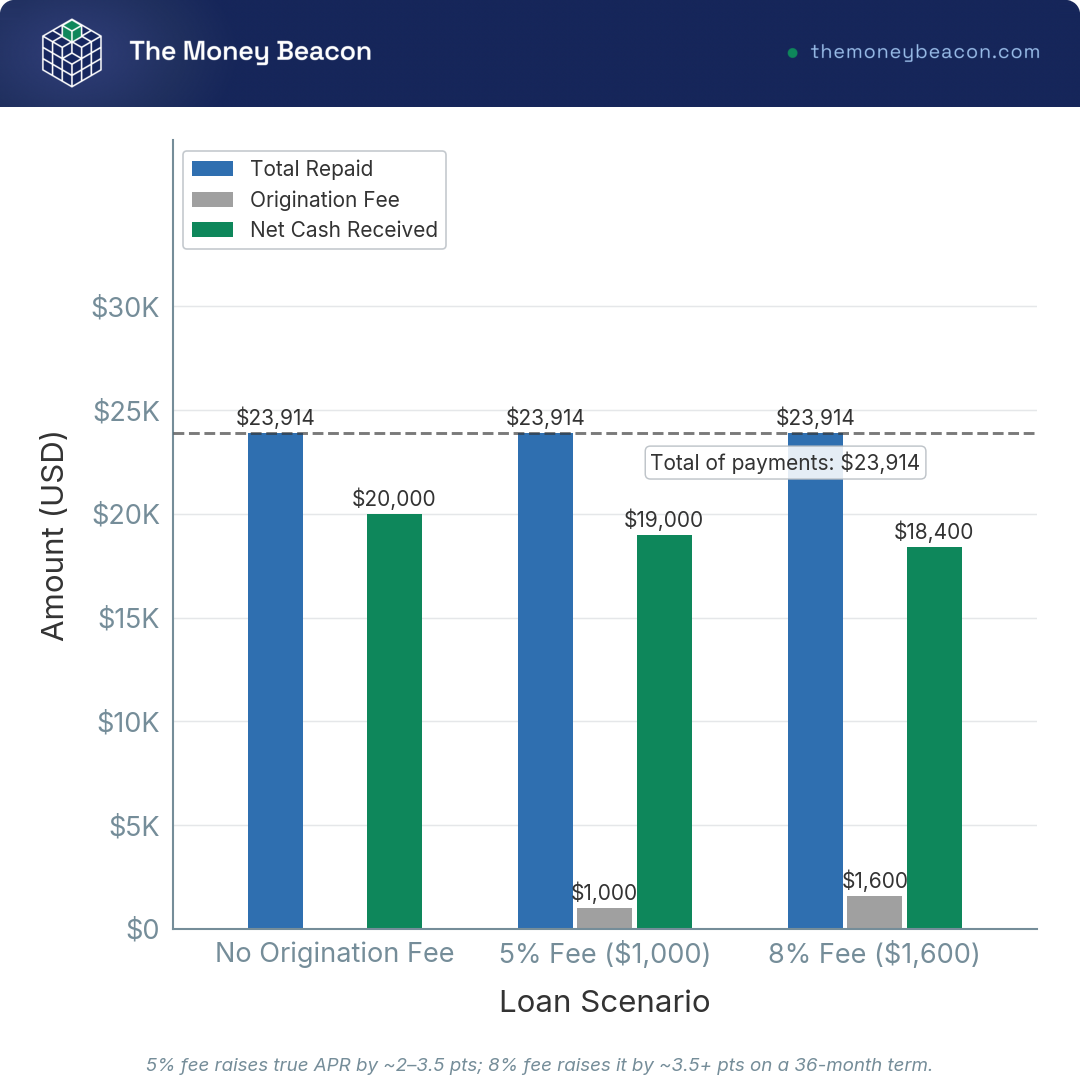
Keep two benchmarks in mind. The average rate on a 24-month personal loan at a commercial bank is 11.40% APR (Federal Reserve G.19), and the average credit card charges around 21% APR. Anything under 11.40% beats the market, and anything under about 15% significantly reduces credit card debt.
1.2 The six lenders at a glance
Here’s the field before you compare personal loans.
The six lenders at a glance
| Criterion | SoFi | LightStream | Discover | Upgrade | Best Egg | Upstart |
|---|---|---|---|---|---|---|
| APR floor (autopay) | 7.74% | 6.49% | Not disclosed | 7.74% | 6.99% | 6.20% |
| Origination fee | None required (optional 0% to 7%) | None | None | 1.85% to 9.99% | 0.99% to 9.99% | 0% to 12% |
| Max loan | $100,000 | $100,000 | $40,000 | $50,000 | $50,000 | $50,000 |
| Min FICO (approx) | ~680 | ~660+ | No published min | ~600 | ~640 | No min (most states) |
| Funding speed | Same day | Same day | Next business day | Same day | Next business day | ~1 business day |
| Standout feature | Direct Pay + ecosystem | Rate Beat | 30-day money-back | Fair-credit + joint | Secured option | Alternative-data underwriting |
Data current as of June 2026.
The APR range for Discover wasn’t clearly listed on their website, so it’s marked as “not disclosed.”
1.3 Who advertises the lowest APR floor
An APR floor is the best-case scenario, not the rate quoted to the average borrower. With the autopay discount applied, Upstart advertises the lowest floor at 6.20%, LightStream 6.49%, Best Egg 6.99%, and SoFi and Upgrade tie at 7.74%. All of these rates surpass the 11.40% G.19 average, the bar a lowest APR personal loan has to beat.
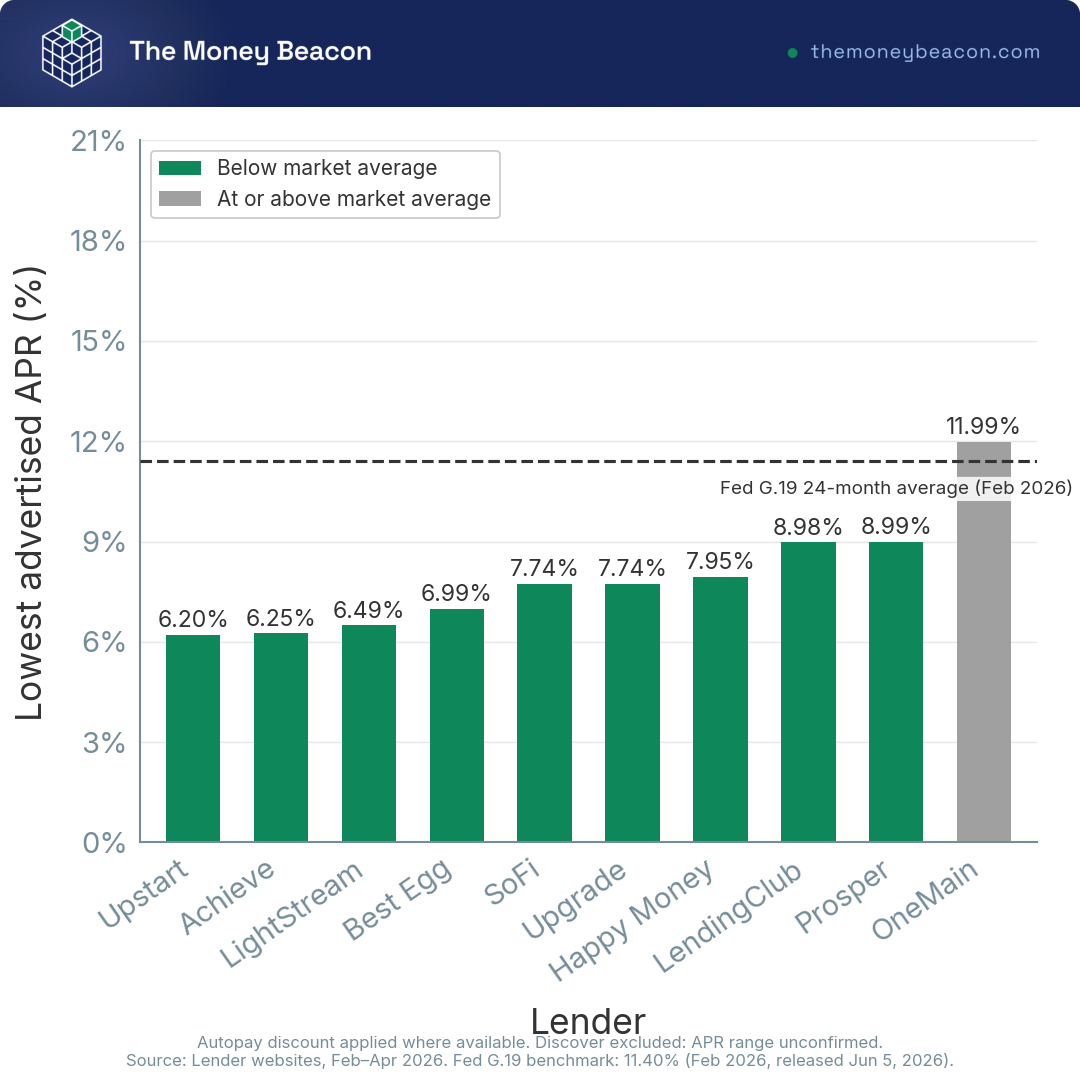
Remember that the floor is just a marketing number. Your own rate is set after a hard pull, and for most borrowers, it ends up well above the floor.
1.4 How much you can borrow and how fast
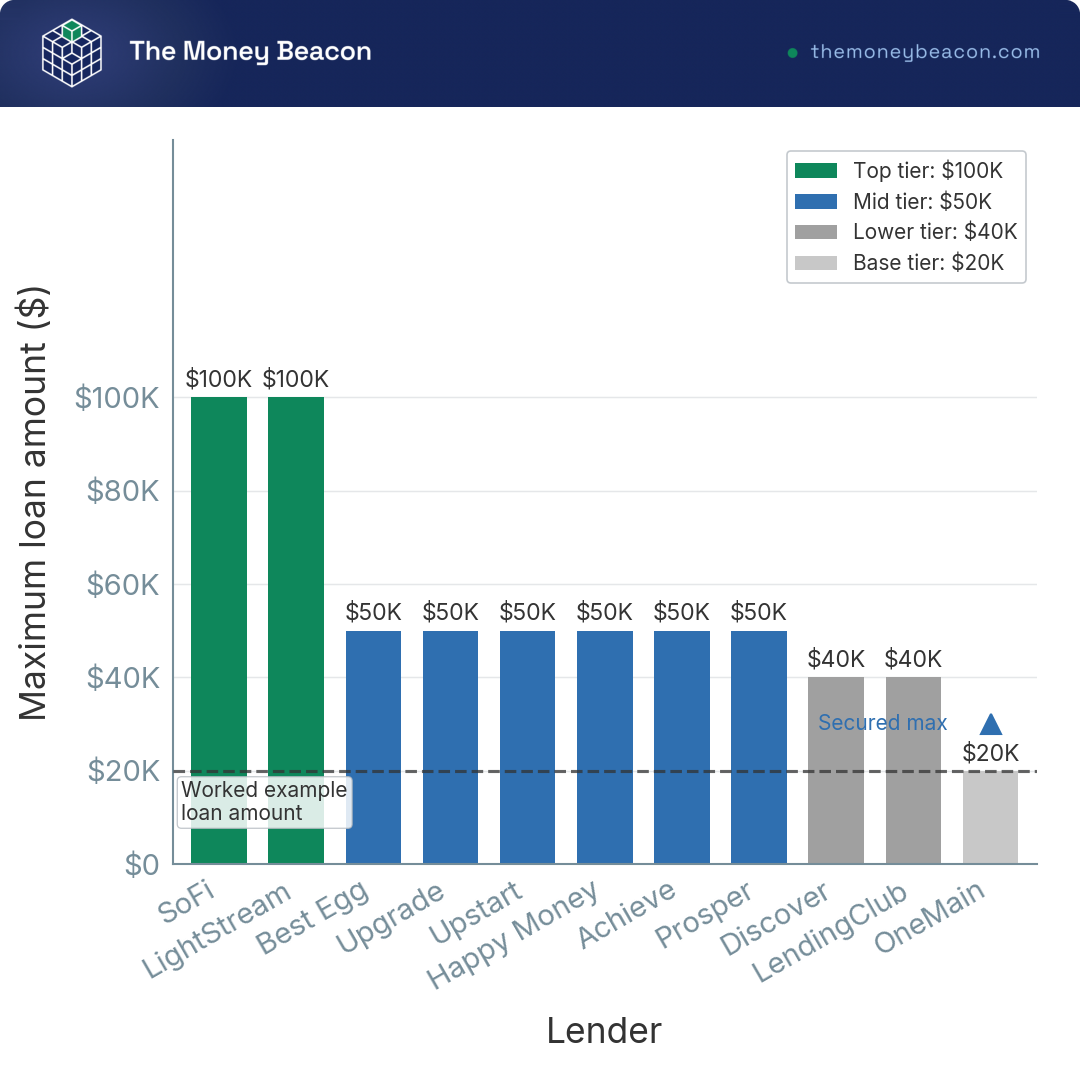
SoFi and LightStream dominate the large-loan category, offering loans of up to $100,000. In contrast, Discover caps at $40,000, while Upgrade, Best Egg, and Upstart offer loans of up to $50,000. Almost any of them can fund the $20,000 loan of the example above, but for a $70,000 home project, the field narrows quickly.
Speed is the other non-price dimension. The chart below shows same-day funding at the top of the field and a few days at the bottom. There’s one catch, though: if you choose direct payoff, where the lender pays your old creditors directly, add a few days for those checks to clear.
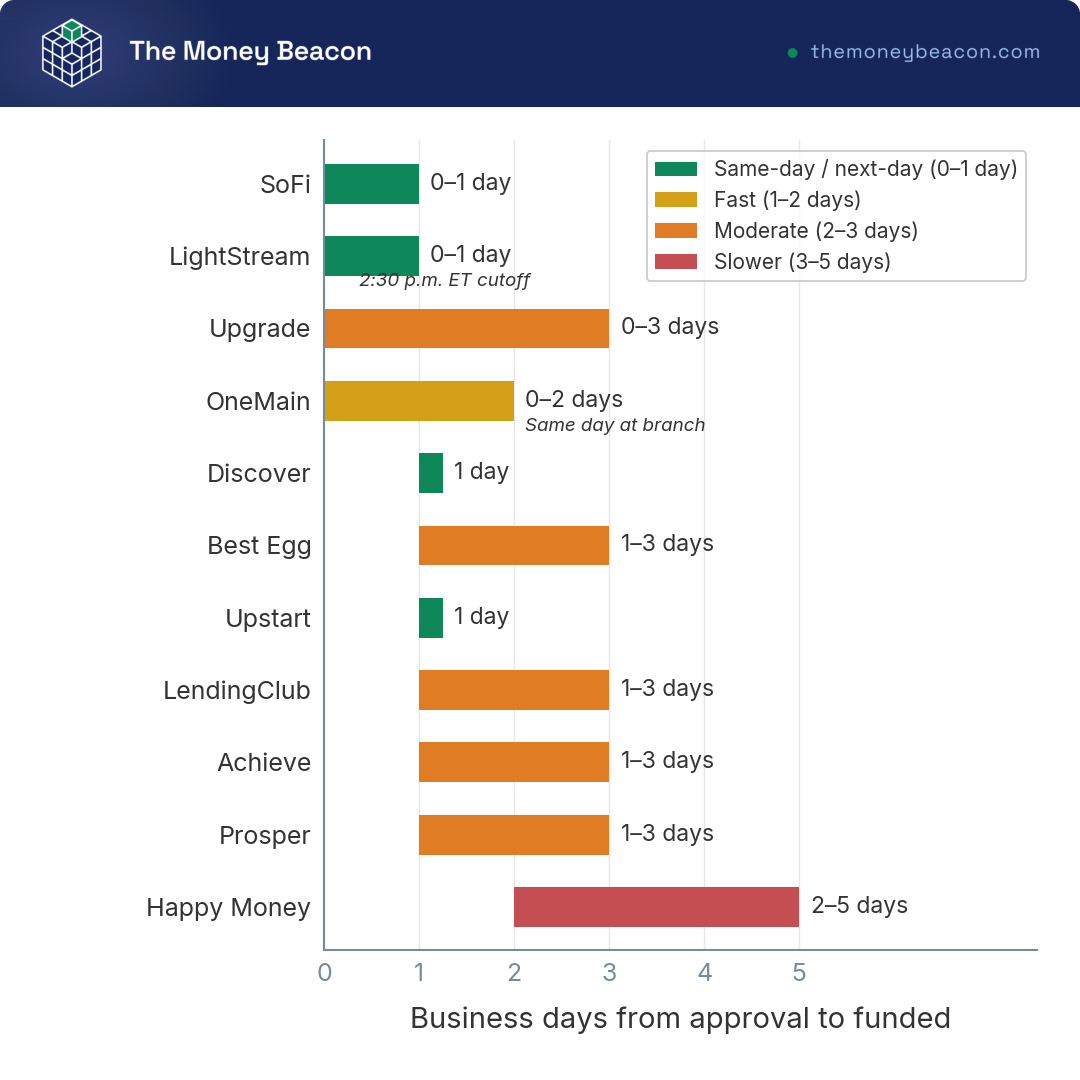
So match the funding window to your deadline before choosing a rate.
1.5 How the lenders split on origination fees
The six fall into three groups regarding the most important fee. Three of them do not require a fee: SoFi, LightStream, and Discover. Two are in the mid-range: Upgrade, with a fee ranging from 1.85% to 9.99%, and Best Egg, with a fee ranging from 0.99% to 9.99%. One carries a high ceiling: Upstart, where the loan origination fee can reach 12%.
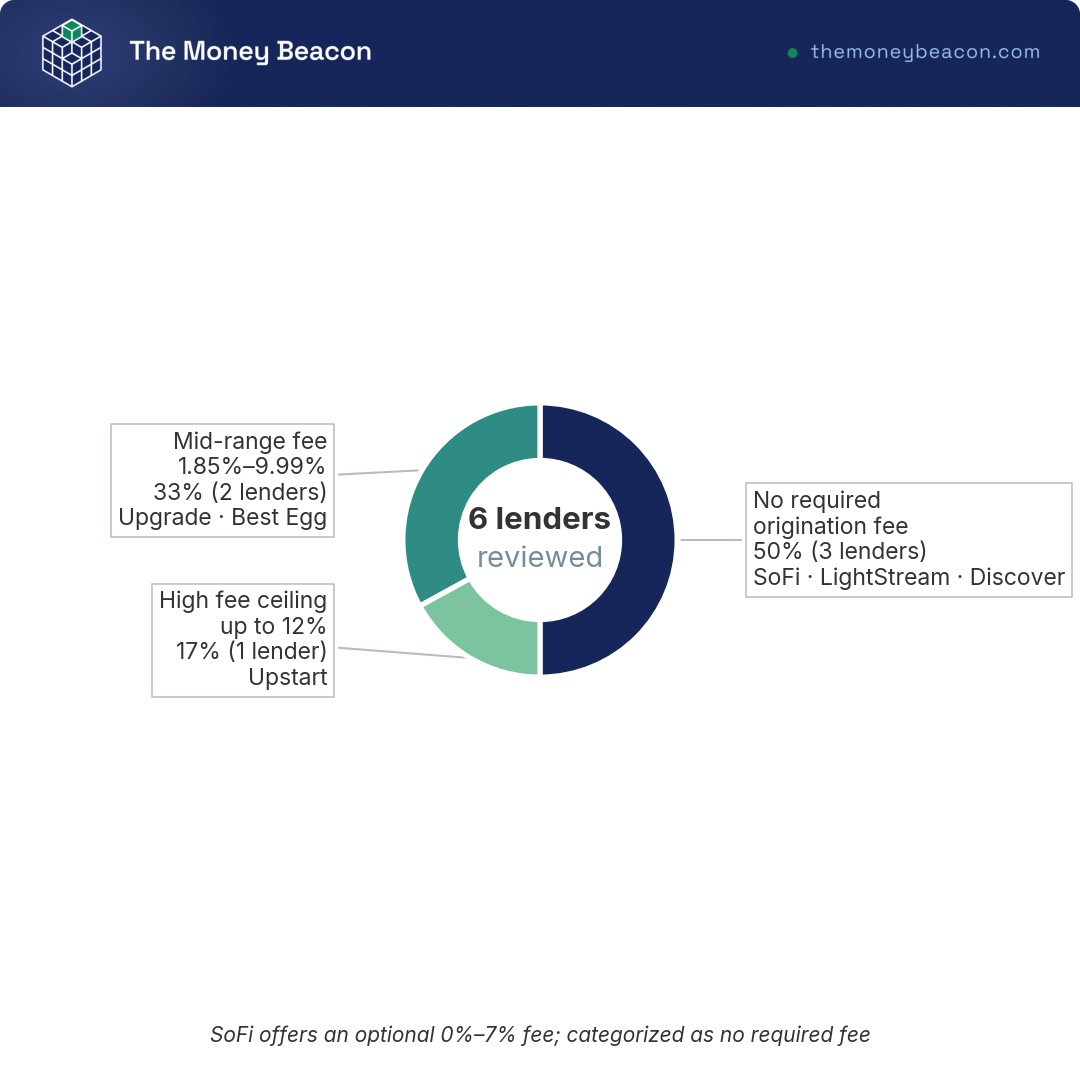
SoFi is the one to read carefully. Its 0% to 7% fee is optional, something you elect to buy down your rate, so you can choose $0 and it counts as no required fee.
1.6 The borrowing process and what applying does to your credit
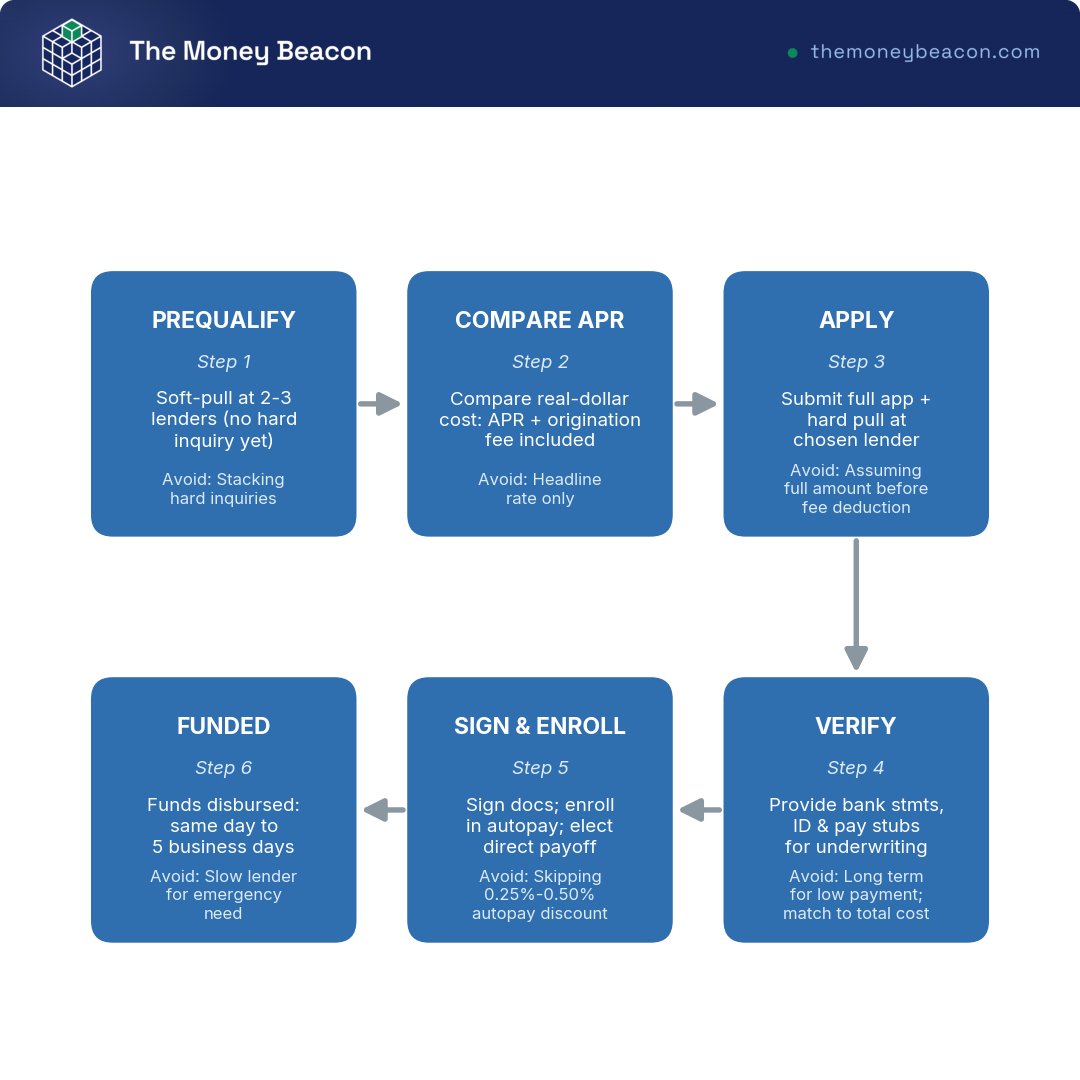
The path from shopping to being funded comprises six steps, with mistakes lurking at each one: prequalify with a soft pull (don’t stack full applications), compare offers on disclosed APR (not the rate), pick a term (don’t stretch it just for a lower payment), submit one full application that triggers a hard pull, verify income and identity, then get funded with autopay on so you don’t lose the 0.25% to 0.50% discount.
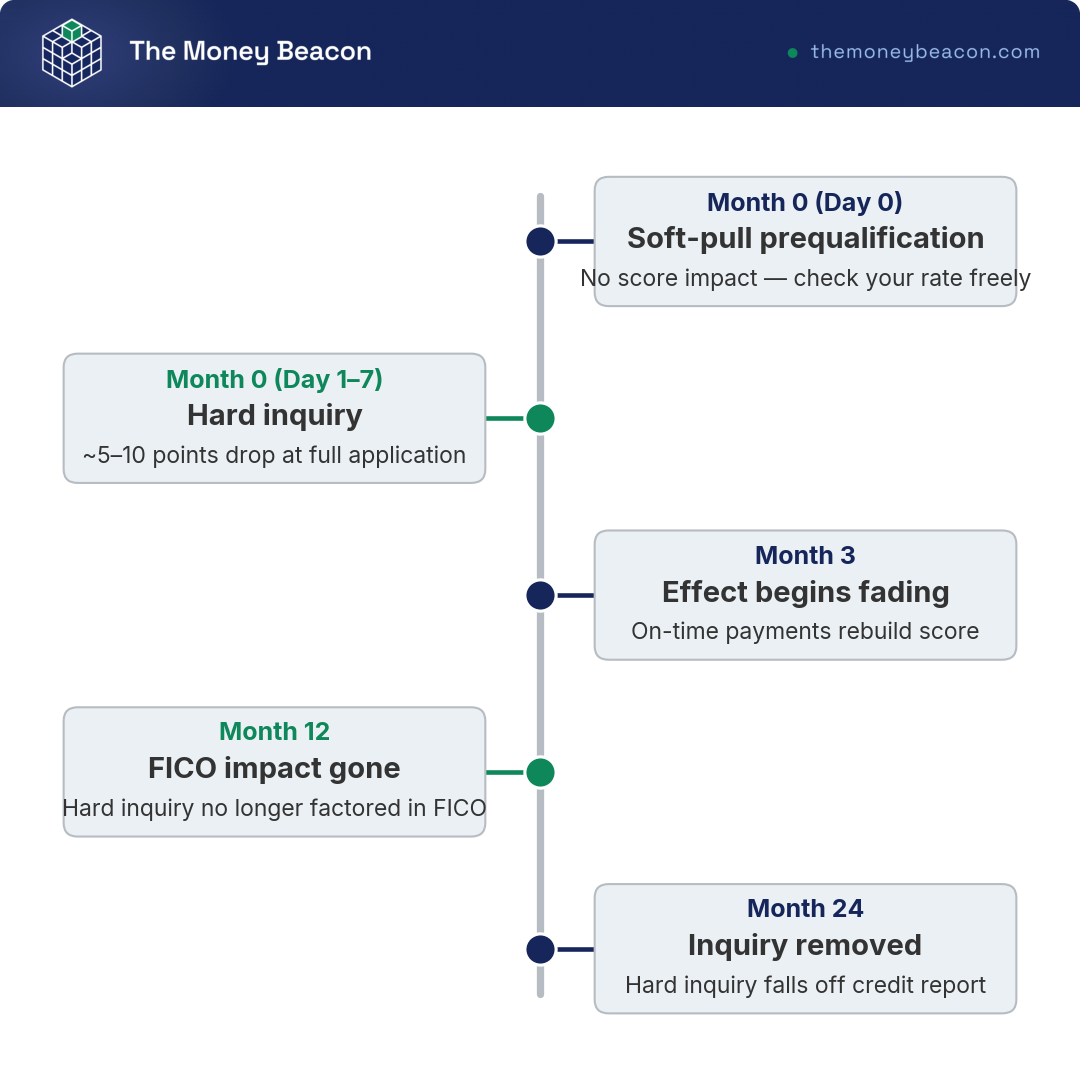
Now for the part people fear most: the credit hit. The soft pull at prequalification doesn’t affect your score. A hard inquiry triggered by a full application typically drops your score by about 5 to 10 points. It stops affecting your FICO score (the credit score most lenders use) after 12 months and falls off your report entirely after 24 months (Experian).
So the move is simple: prequalify at two or three lenders, then complete exactly one full application. That is the whole point of personal loan prequalification, and a loan calculator on the lender’s site will turn each offer into a monthly dollar figure before you commit. If you’re using one of these to wipe out card balances, our guide to how to consolidate debt with loans or balance transfers walks through the order of operations.
2. SoFi: best for excellent credit wanting the cleanest cost structure
2.1 SoFi overview
SoFi is a prime online fintech lender built for excellent-credit borrowers who want the cleanest possible cost structure. It writes loans up to $100,000, lets you check your rate with a soft pull before any hard inquiry, and wraps the loan inside a membership ecosystem of checking, savings, and investing. If you’re shopping the best personal loans for excellent credit, this is the benchmark against which the rest are measured. Rates current as of 3/31/2026.
2.2 SoFi strengths
I’ll start with the fees, because there mostly aren’t any. SoFi charges no required origination fee, no late fee, and no prepayment penalty, though you can elect an optional 0% to 7% fee to buy your rate down if it makes sense for you. The APR floor is 7.74% with the 0.25% autopay discount, and loans run up to $100,000.
SoFi’s toolset is what really sets it apart. You get soft-pull prequalification to see a real rate without a hard inquiry, Direct Pay to send funds straight to your old creditors for consolidation, and same-day to one-business-day funding. There’s also a co-applicant option and an unemployment-protection benefit if your income ever stops. For a borrower who wants no-fee personal loans with a full feature set, that’s a deep bench.
These benefits are part of the wider banking, investing, and loans ecosystem, which is worth more if you actually use the other accounts.
2.3 SoFi weaknesses
SoFi isn’t the cheapest option. Its 7.74% floor is higher than the lowest advertised floor among the no-fee leaders, so a rate hunter with pristine credit can do slightly better. The best pricing also assumes strong credit, roughly 680 and up to get approved, and higher still to actually hit the floor.
Two smaller frictions complete the picture. The optional 0% to 7% fee can confuse anyone comparing headline rates, since it changes the quoted number without being required. And the member perks only pay off if you plug into the broader ecosystem rather than treating SoFi as a one-time loan.
2.4 SoFi pricing and fees
Here are SoFi’s numbers.
SoFi pricing and fees
| Item | Detail |
|---|---|
| APR floor (autopay) | 7.74% |
| Origination fee | Optional 0% to 7%, none required |
| Late fee | None |
| Prepayment penalty | None |
| Maximum loan | $100,000 |
| Autopay discount | 0.25% |
Data current as of June 2026.
With no required fee and that $100,000 ceiling, the disclosed APR ends up close to the quoted rate, which is what you want.
2.5 Who SoFi is for
SoFi is ideal for an excellent-credit borrower who wants no required fees, the ability to borrow up to $100,000, a soft-pull rate check before committing, and especially someone who’ll use the wider ecosystem. However, it’s not the right choice for a borrower with fair credit who may not meet the minimum credit score requirement of about 680, nor for a borrower who is looking for the lowest advertised interest rate.
3. LightStream: best for low-APR seekers with a competing offer
3.1 LightStream overview
LightStream, the online lending division of Truist Bank, is designed for borrowers with excellent credit who need to fund large purchases, such as a vehicle or home improvement project, without collateral or an appraisal. LightStream is known for offering some of the lowest advertised APRs and a Rate Beat promise. It provides loans of up to $100,000. Rates are current as of June 2026.
If a chunk of that borrowing is to finance a car, our comparison of auto financing is worth a look alongside it.
3.2 LightStream strengths
The most important factor is the rate. LightStream advertises a 6.49% APR floor with its 0.50% autopay discount, which is among the lowest of the no-fee leaders. There’s no origination fee and no late fee, so the disclosed APR tracks the quoted rate almost exactly.
Then there’s the interesting part: a Rate Beat program that beats a qualifying competitor’s unsecured loan rate by 0.10 percentage points. Present a qualifying competitor’s offer and LightStream will undercut it. Loans are available up to $100,000, and joint applications are accepted. You can receive funding on the same day you’re approved and verified before the 2:30 p.m. ET cutoff on a business day.
3.3 LightStream weaknesses
The big trade-off is the rate check itself. LightStream has no soft-pull prequalification, so finding out your actual rate requires a hard pull and the 5 to 10 point hit that comes with it. There’s no risk-free window to shop first.
It’s designed for those with excellent credit, so those with weaker profiles are unlikely to qualify. Rather than paying your creditors directly, funds arrive as cash in your account, which is less convenient if you’re consolidating and would rather have the lender handle the payoffs. And both the lowest floor and the Rate Beat promise really only help if you already hold a strong competing quote.
3.4 LightStream pricing and fees
Here are LightStream’s numbers.
LightStream pricing and fees
| Item | Detail |
|---|---|
| APR floor (autopay) | 6.49% |
| Origination fee | None |
| Late fee | None |
| Prepayment penalty | None |
| Maximum loan | $100,000 |
| Autopay discount | 0.50% |
Data current as of June 2026.
With an all-zero fee column, the 6.49% floor is close to the all-in cost for a top-tier borrower.
3.5 Who LightStream is for
LightStream is the best choice for an excellent-credit borrower who already holds a competing quote to undercut and wants the lowest no-fee APR for a large purchase up to $100,000. It’s not the right choice for someone who needs to see a rate without a hard pull, or for anyone consolidating who wants creditors paid directly rather than receiving cash.
Tom’s take

I’ve shopped most of the big private banks for my own borrowing, and the lesson carries straight over here: nobody leads with their best terms, so you make them compete. A Rate Beat promise is only worth anything if you walk in holding a real quote to beat.
4. Discover: best for good credit consolidating credit-card debt
4.1 Discover overview
SoFi and LightStream set the standard for low fees and high credit ceilings. One tier lower, Discover is the no-fee bank that good-credit borrowers use to consolidate credit card debt into one fixed payment. Its appeal lies in its predictability rather than its low rates. Discover pays your old creditors directly and backs the loan with a 30-day money-back guarantee. If you’re looking for a personal loan for debt consolidation from a familiar name, this is the workhorse.
4.2 Discover strengths
The fee column is the easy part. Discover charges no origination fee, no fees of any kind, so the rate you’re quoted is close to your all-in cost. For someone consolidating, the standout feature is direct payoff of your old creditors: Discover sends the money straight to your card issuers instead of dropping it in your account and trusting you to clear the balances.
The 30-day money-back guarantee is unusual here: return the funds within 30 days and you pay no interest. Funding can be deposited as soon as the next business day after you accept, loans run up to $40,000, and you get the fixed terms of an established bank. For a clean consolidation with no complicated fees to untangle, that’s a tidy package.
4.3 Discover weaknesses
The key weakness is the rate itself. At the time of writing, Discover’s APR range wasn’t clearly confirmed on discover.com, so prequalify with a soft pull to see your personalized APR rather than trusting any figure quoted elsewhere. Until you see it in writing, you’re shopping blindly.
The structural limits are clear. There’s no joint or co-signer option, so you can’t add a co-borrower to improve your odds or your rate, and the loan tops out at $40,000. Due to the ownership change and card system migration starting around July 2026, confirm the current branding before signing.
4.4 Discover pricing and fees
Here’s Discover pricing laid out on the same dimensions as the rest.
Discover pricing and fees
| Item | Detail |
|---|---|
| APR range | Not disclosed |
| Origination fee | None |
| Other fees | None |
| Prepayment penalty | None |
| Maximum loan | $40,000 |
Data current as of June 2026.
The catch is the APR cell: Discover doesn’t post a reliable range, so the only number that matters is the one your own soft-pull quote returns.
4.5 Who Discover is for
Discover is ideal for a good-credit borrower consolidating credit-card debt who wants a no-fee bank that pays creditors directly and backs it with a money-back guarantee. It’s not the right choice for someone who needs a joint application, a loan above $40,000, or a confirmed advertised APR before they’ll apply, since you won’t see the debt consolidation loan rates that apply to you until you’ve prequalified. If a Discover loan is one half of a card-payoff plan, our comparison of 0% intro APR balance transfer cards is worth reading alongside it, since a promo-rate card can sometimes clear a balance for less.
5. Upgrade: best for fair-credit borrowers who need accessible approval
5.1 Upgrade overview
So what happens when your score is below the prime cutoff and a bank turns you down? Upgrade is a fintech lender that works with people who have fair credit, around 600 FICO, when prime lenders decline. It’s one of the better personal loans for fair credit because it pairs that wider approval with real consolidation tools: you can file a joint application to improve your odds, and Upgrade can pay your creditors directly. Designed for accessibility rather than the lowest possible floor, it’s a sensible first stop for lenders with ok credit ratings.
5.2 Upgrade strengths
The main strength is reach. Upgrade approves borrowers around 600 FICO, widening the door for applicants who get declined elsewhere, and it lets you add a co-borrower on a joint application that can lift both your odds and your rate. For anyone consolidating, it also pays your old creditors directly.
The rest of the package keeps pace with the prime lenders. The advertised APR floor is 7.74%, loans range up to $50,000, and funding is received anywhere from the same day to a few business days after your verification is complete. This combination of fair-credit access, direct payoff, and a co-borrower option is usually unattainable for borrowers one tier below prime.
5.3 Upgrade weaknesses
The trade-off is the fee. Upgrade charges an origination fee of 1.85% to 9.99% that gets folded into the disclosed APR and reduces the cash that you receive, so the rate you’re quoted isn’t the rate you really pay. There’s also a $10 late fee if a full payment is more than 15 days late.
The advertised floor comes with the usual asterisk. The 7.74% rate is reserved for borrowers with strong credit profiles, so those with fair credit should plan on a higher rate plus the origination fee. The $50,000 maximum only matters if you need more than that.
5.4 Upgrade pricing and fees
Here are Upgrade’s numbers.
Upgrade pricing and fees
| Item | Detail |
|---|---|
| APR floor | 7.74% |
| Origination fee | 1.85% to 9.99% |
| Late fee | $10 |
| Prepayment penalty | None |
| Maximum loan | $50,000 |
Data current as of June 2026.
The origination fee is the key factor: it causes the disclosed APR to exceed the 7.74% threshold. Therefore, consider the all-in APR and the cash received together.
5.5 Who Upgrade is for
Upgrade is ideal for a fair-credit borrower who needs accessible approval, wants the option of a joint application, or is consolidating with direct payoff. It’s not the right choice for an excellent-credit borrower who can secure a no-fee loan at a lower APR elsewhere. Prequalify and add a co-borrower, if necessary, to improve your rate. Then, confirm the dollar amount.
6. Best Egg: best for good credit financing a large purchase or consolidation
6.1 Best Egg overview
Best Egg is a fintech lender that caters to borrowers with good credit who are looking to fund a large purchase or consolidate debt. It has strong approval rates in the good-credit band. Its real distinction is its secured option: you can pledge home fixtures or vehicle equity to qualify or earn a better rate if your profile doesn’t meet standard approval requirements. Unsecured loans range up to $50,000. If you have good credit and a deadline, this is one of the quicker options.
6.2 Best Egg strengths
Speed and access are the key strengths. Best Egg advertises an APR starting at 6.99%, and approximately half of its customers receive funding within 24 hours. The entire process usually takes one to three business days. For a borrower with good credit and a deadline, that’s near the front of the pack.
The secured option amplifies its reach. By allowing you to secure the loan with home fixtures or vehicle equity, Best Egg can approve weaker credit profiles that unsecured-only lenders would turn away. This is why its approval rates for those with good credit hold up so well. Loans of up to $50,000 can cover most needs.
6.3 Best Egg weaknesses
The fee is the cost of that speed. Best Egg charges an origination fee ranging from 0.99% to 9.99% on unsecured loans, which increases the true APR above the quoted rate. Therefore, the disclosed APR is the only number worth comparing. There is also a $15 returned-payment fee if a draft bounces, though there is no late fee at this time.
The feature set has gaps, too. Best Egg does not pay creditors directly, so consolidators must clear old balances themselves once funds are received. Additionally, support for joint applications is limited. The 6.99% interest rate is reserved for the strongest applicants, and the maximum loan amount is $50,000.
6.4 Best Egg pricing and fees
Best Egg pricing and fees
| Item | Detail |
|---|---|
| APR floor | 6.99% |
| Origination fee (unsecured) | 0.99% to 9.99% |
| Origination fee (secured) | 1.49% to 9.99% |
| Late fee | None currently |
| Maximum loan | $50,000 |
Data current as of June 2026.
The 6.99% floor rate looks good, but the origination fee (whether secured or unsecured) increases the disclosed APR. Confirm the total cost and the amount you’ll receive before making a decision.
6.5 Who Best Egg is for
Best Egg is ideal for a good-credit borrower who wants fast funding for a large purchase, or who needs the secured option to qualify with a weaker profile. However, it’s not the right choice for someone who wants a no-fee loan or direct creditor payoff for debt consolidation. Best Egg still charges an origination fee and doesn’t lend to anyone with a FICO score below 640. So a borrower with a lower score, or one declined outright, will need a lender that underwrites differently. Prequalify, read the disclosed APR, and make an informed decision.
7. Upstart: best for thin-file and lower-score borrowers
7.1 Upstart overview
So far, every lender relies on one number to decide who gets approved: your FICO score. This leaves out a significant group of borrowers: those with thin files or scores that traditional models read as red flags, even though they pay their bills on time. Upstart is the fintech lender built for that gap. It uses education and employment data from more than 1,500 variables to underwrite loans, so it can approve borrowers that a bureau-only model rejects. In most states, it has no official FICO minimum. This makes Upstart a genuine option for personal loans for those with bad credit or a thin file. Loans range from $1,000 to $50,000. Its alternative-data engine is the main reason Upstart is included in this comparison.
7.2 Upstart strengths
Access is the key strength here. Upstart’s alternative-data underwriting approves applicants that other models reject. With no official FICO minimum in most states, thin-file or first-time borrowers get a real shot rather than an automatic decline. For someone who is new to the workforce or rebuilding their credit, that open door is crucial.
The rest of the package is competitive too. The advertised APR floor is 6.20% on five-year rates for the strongest profiles, which comfortably clears the 11.40% market average. Funding is available as soon as one business day after acceptance, loans reach $50,000, and there’s an optional auto-secured loan if pledging a vehicle earns you a better rate. Pair the widest approval reach in this comparison with a low floor and same-week funding, and Upstart offers something no prime lender does. For borrowers refinancing education debt, our comparison of student loan refinancing options is worth a look.
7.3 Upstart weaknesses
Access comes at a price, and that price is the fee. Upstart’s origination fee can reach 12%, the highest in this comparison. This fee is folded straight into the disclosed APR. For a $20,000 loan, a 12% fee amounts to $2,400, which is deducted before any payments are made. Therefore, a borrower with a thin file must budget for this cost rather than considering the 6.20% floor as their offer.
The other limits follow the same logic. The maximum APR is high, reaching about 35.99%, and the low floor is reserved for top profiles. Therefore, a borrower with a low credit score should expect a rate well above the floor. There is also no joint or standard co-signer option; only the optional auto-secured loan is available, so you can’t bring a co-borrower to improve your rate.
7.4 Upstart pricing and fees
Upstart pricing and fees
| Item | Detail |
|---|---|
| APR floor (autopay) | 6.20% |
| Maximum APR | About 35.99% |
| Origination fee | 0% to 12% |
| Late fee | Charged |
| Maximum loan | $50,000 |
Data current as of June 2026.
The 6.20% floor is low, but the origination fee can be as high as 12%. This difference between the advertised rate and the disclosed APR is what you will actually pay. Prequalify and read the all-in APR and cash received together because the difference can be significant.
7.5 Who Upstart is for
Upstart is ideal for borrowers with weak files, first-time borrowers, or borrowers with lower scores who can’t get approved using a traditional FICO model and who accept a possible high fee as the cost of access. However, it’s not the right choice for an excellent-credit borrower who can secure a no-fee loan with a lower disclosed APR elsewhere. If you need the alternative-data option, prequalify, assess the disclosed APR, and weigh the fee against the benefit of getting approved at all.
8. The verdict: which personal loan fits your profile
8.1 The full comparison, side by side
After assessing each lender on its own terms, here they are lined up on the same criteria.
The full comparison, side by side
| Criterion | SoFi | LightStream | Discover | Upgrade | Best Egg | Upstart |
|---|---|---|---|---|---|---|
| APR floor (autopay) | 7.74% | 6.49% | Not disclosed | 7.74% | 6.99% | 6.20% |
| Origination fee | None required (optional 0% to 7%) | None | None | 1.85% to 9.99% | 0.99% to 9.99% | 0% to 12% |
| Late fee | None | None | None | $10 | None currently | Charged |
| Max loan | $100,000 | $100,000 | $40,000 | $50,000 | $50,000 | $50,000 |
| Min FICO (approx) | ~680 | ~660+ | No published min | ~600 | ~640 | No min (most states) |
| Funding speed | Same day | Same day | Next business day | Same day | Next business day | ~1 business day |
| Direct creditor payoff | Yes (Direct Pay) | Via cash | Yes | Yes | Via cash | Via cash |
| Joint application | Yes | Yes | No | Yes | Limited | No |
| Standout feature | Direct Pay + ecosystem | Rate Beat | 30-day money-back | Fair-credit + joint | Secured option | Alternative-data underwriting |
Data current as of June 2026.
8.2 Fees and features at a glance
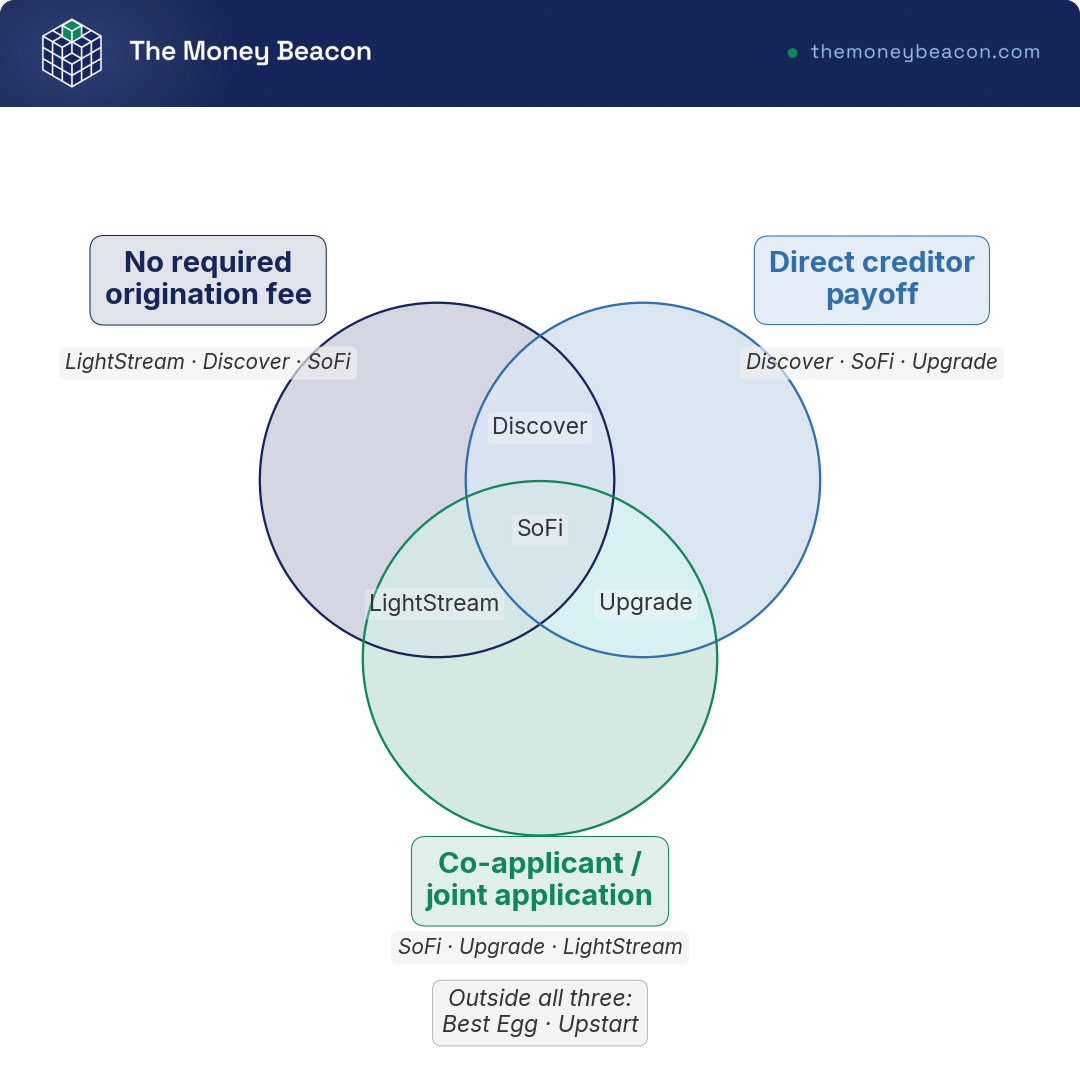
The higher the fee ceiling, the greater the difference between a lender’s quoted rate and its disclosed APR. The chart below ranks lenders based on their fee ceilings.
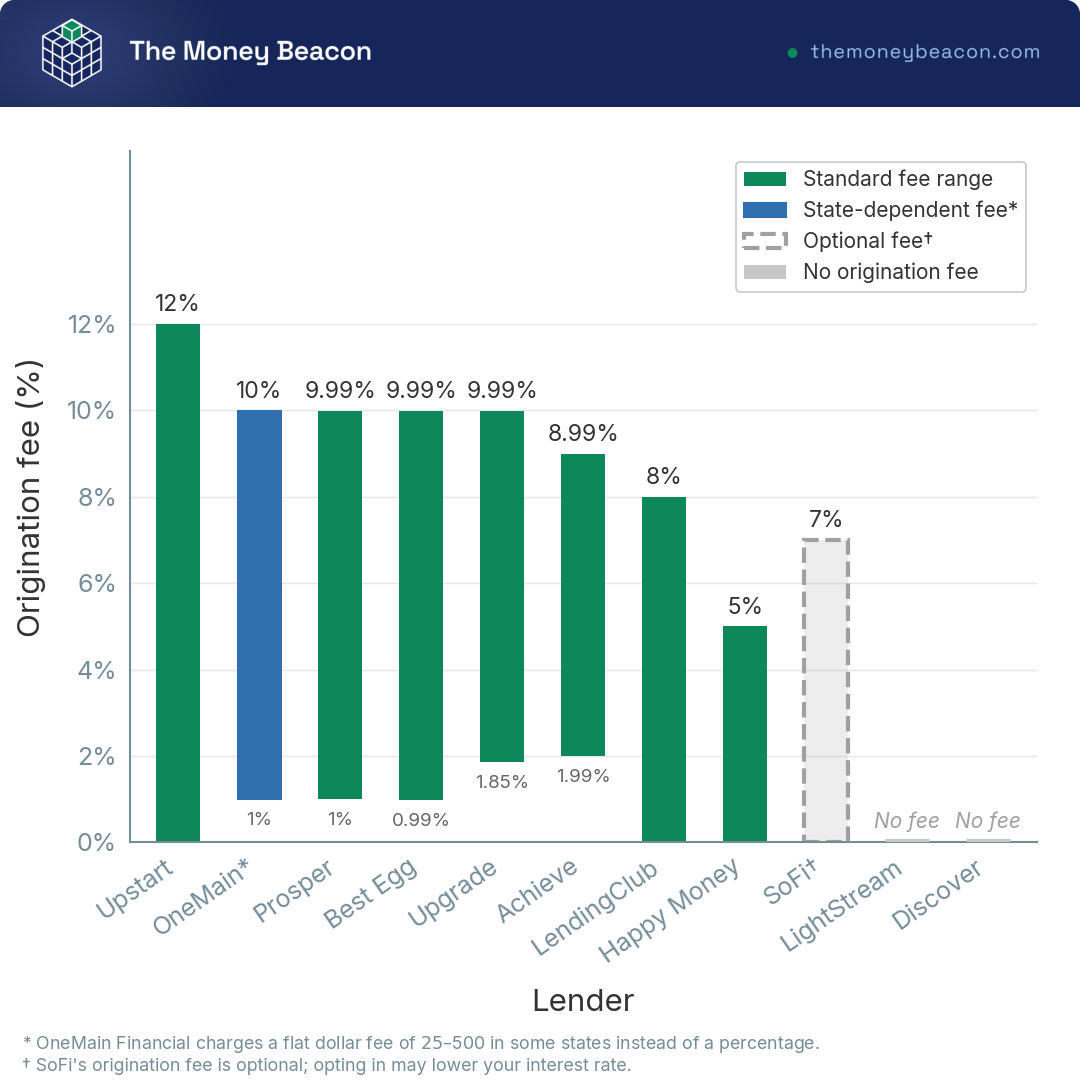
Now to the features. Three things make a lender consolidation-friendly: no required fee, direct creditor payoff, and a joint application. Only SoFi offers all three. Discover, LightStream, and Upgrade each offer two; Best Egg and Upstart offer none.
8.3 Cost versus access: positioning the lenders
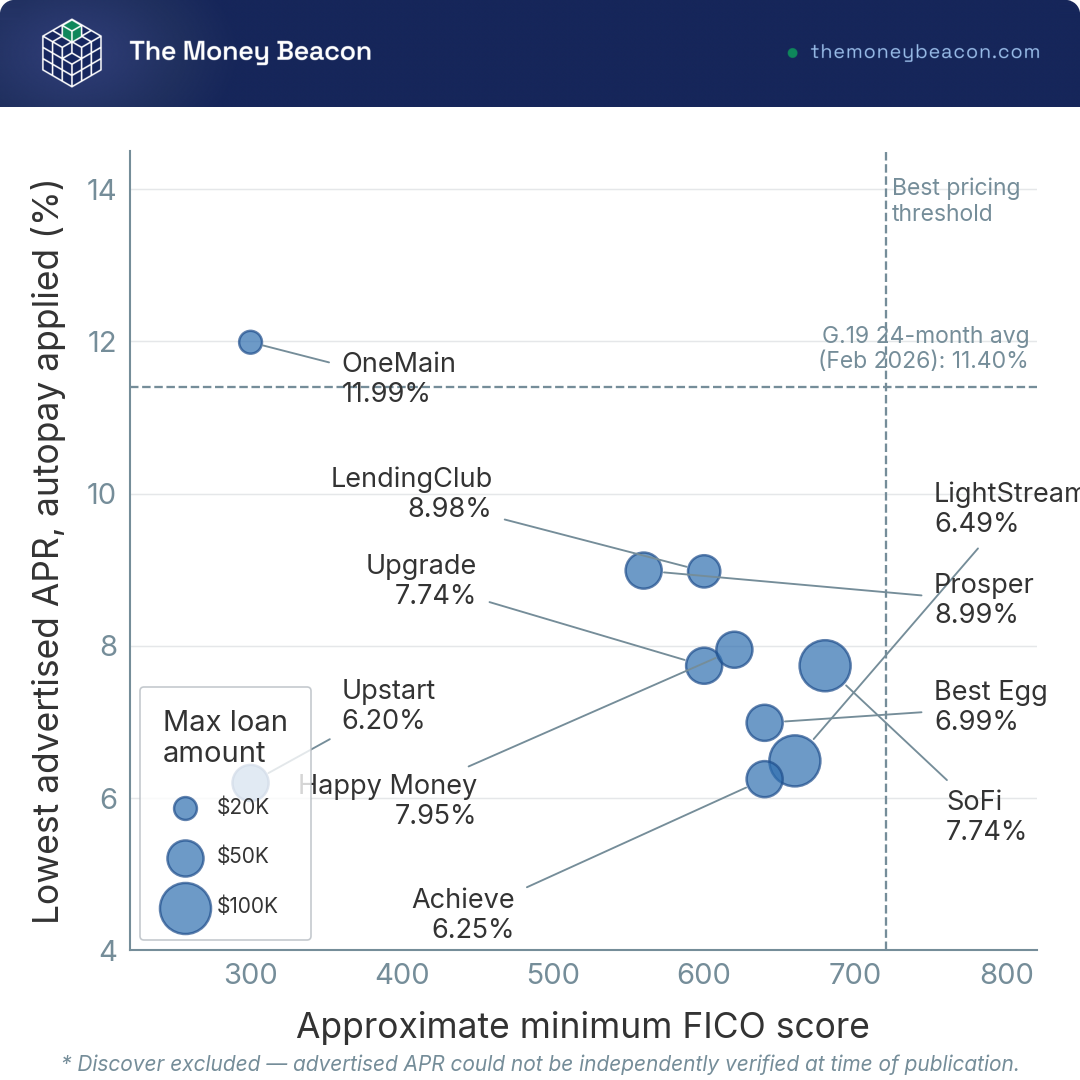
One trade-off runs through this whole comparison. The low-floor, no-fee corner belongs to LightStream and SoFi, the lenders an excellent-credit borrower should aim for. The accessible corner, where the FICO requirement is waived, belongs to Upgrade and Upstart. Lower the credit bar and the cost, in rate or in fee, tends to climb.
Hank’s take
when you follow Fed policy closely, you notice that the lowest advertised floors here are unusually compressed for this point in the cycle, and that window doesn’t stay open forever. If a low fixed-rate offer fits your number today, locking it beats waiting for a rate that may move the wrong way.
8.4 Verdict by profile, and a quick decision tree
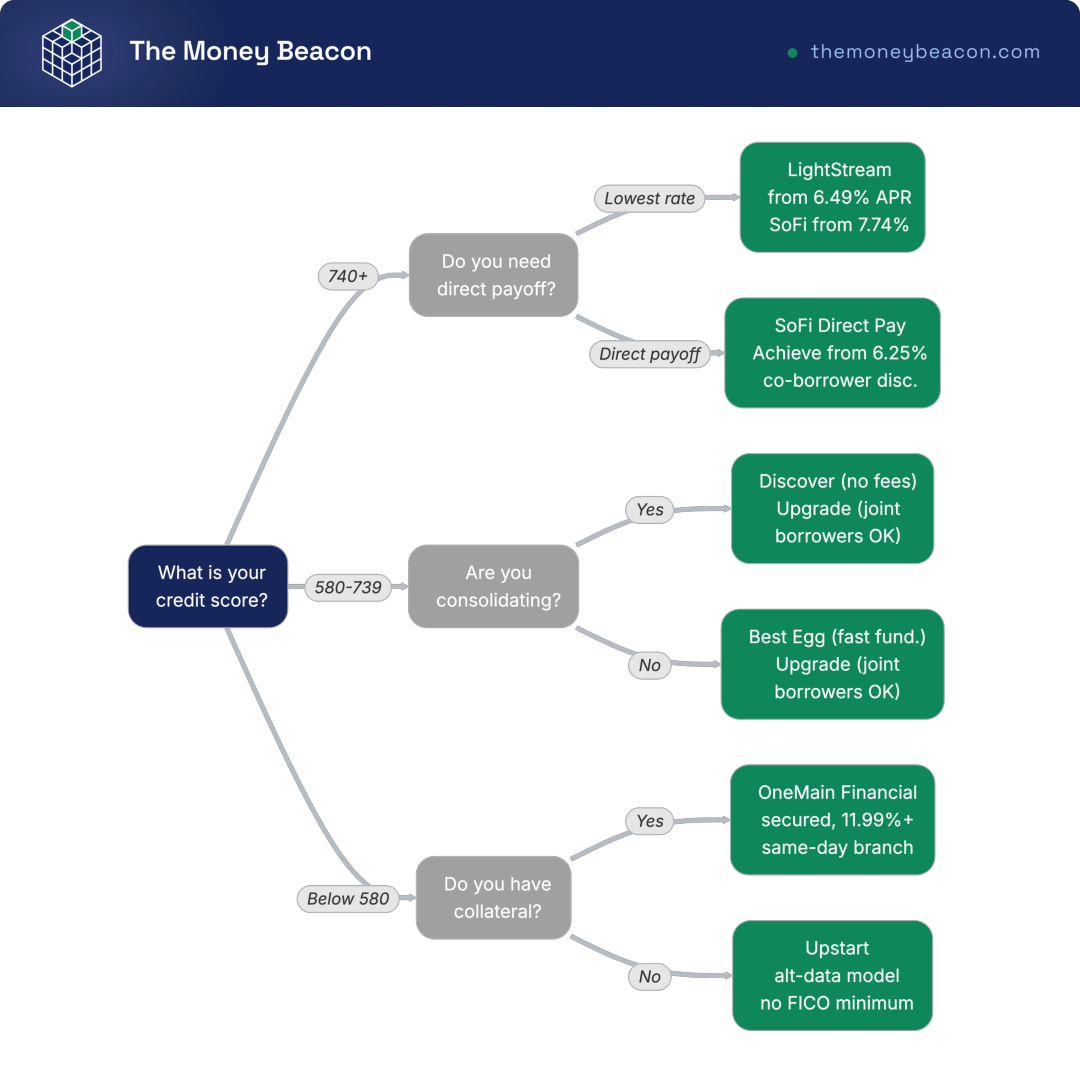
So which lender actually fits you? It comes down to your score and your goal, and three profiles cover most readers.
If you’re an excellent-credit borrower at 740 or above, prequalify with LightStream and SoFi. LightStream has the lowest no-fee rate at 6.49% and will undercut a qualifying competitor with its Rate Beat promise, so bring a real quote. SoFi has a similar no-fee structure, adds a soft-pull rate check and Direct Pay, and writes loans up to $100,000. The deciding factor is the lowest disclosed APR.
If you’re a fair-credit borrower in the 580 to 669 range, consider Upgrade and Upstart. Upgrade can approve a FICO score of around 600 with joint applications and direct payoff. Upstart’s alternative-data underwriting can approve borrowers with a weak file and no FICO minimum in most states. Either way, expect an origination fee on top of your rate, and it’s worth checking out a federal credit union, which is capped at 18% APR, as a cheaper alternative.
If you’re a fast-cash or emergency borrower, SoFi, LightStream, and Upgrade can fund as fast as same day, so complete your identity and income verification the moment you apply.
If a personal loan isn’t the cheapest tool for your situation and you own a home, our guide to a home equity line of credit is worth having a look at before you sign, since a secured rate can beat any unsecured offer here.
Conclusion
Let’s go back to the beginning: the “7.99% APR” homepage and the offer that came back at 16%, with $1,000 missing. Once you know what to look for, the “rates from Y.XX%” headline becomes ineffective.
Here’s the lesson in a nutshell. Always compare lenders based on the disclosed APR including the origination fee, in real dollars over the life of the loan, never on the headline rate. The disclosed APR already folds in the origination fee, which is why it’s the only number worth lining up side by side.
The second move won’t cost you anything. Prequalify with a soft pull before submitting a real application. It won’t affect your score. Get two or three personalized APR quotes, and then compare them.
Match the lender to your credit tier instead of fighting it. If your FICO score is above 740, no-fee prime lenders offer the most affordable options. Lenders are available for weaker borrowers, but they will likely carry an origination fee. Run the all-in APR before you sign. The right lender for a score of 800 is the wrong one for a score of 620, and vice versa.
Your next step is small and free. Choose two or three lenders from this comparison that fit your tier. Run a soft-pull prequalification on each one this week and compare the real APRs. The one that costs you the fewest dollars over the term wins. It’s that simple, and you can do it from your couch.
If you’re borrowing to pay off credit-card debt, it’s worth reading our guide to consolidating debt first to confirm a loan beats your other options. It’s also worth comparing the best balance transfer cards, , which can be cheaper than any loan if you can pay off the balance within the 0% interest period. And once the debt is gone, our comparison of high-yield savings accounts shows where to park the emergency fund that keeps you from borrowing next time.
Frequently Asked Questions
What credit score do I need to qualify for the best personal loan rates in 2026?
Lenders reserve their lowest advertised APR for strong credit, commonly 720 FICO and up, ideally the very-good (740 to 799) or exceptional (800 to 850) bands (Experian). Good credit (670 to 739) still qualifies at most prime lenders, but you’ll land mid-range, not at the floor. Fair-credit borrowers (580 to 669) are mostly limited to lenders like Upgrade, Upstart, or OneMain, with a higher APR plus an origination fee. The key distinction: the score that gets you approved is lower than the score that gets you the best rate. At 740 or higher, check Achieve’s 6.25% APR floor.
Does prequalifying for a personal loan hurt my credit score?
No, and it’s one of the most useful tools when shopping. Prequalifying uses a soft pull, which doesn’t affect your score, so you can check your rate at several lenders with no damage. A full application is different: it triggers a hard inquiry, which typically lowers your FICO by about 5 to 10 points, affects your score for about 12 months, and stays on your report for up to 2 years (Experian). So prequalify at two or three lenders, then complete one full application. One caveat: LightStream doesn’t offer soft-pull prequalification, so its application is a hard pull from the start.
What is an origination fee and how much does it actually cost me?
An origination fee is a percentage of the loan, often 1% to 8% and up to about 12% at some lenders, either deducted from your proceeds upfront or financed into the loan. Either way, you net less than you asked for. On a $20,000 loan with a 5% origination fee, the lender deducts $1,000 upfront, so you receive $19,000 even though you repay $20,000 plus interest. Because Regulation Z requires origination fees to be folded into the disclosed APR (12 CFR §1026.4), the fee already appears in the APR you’re shown. So compare the disclosed APR, not the headline “rates from” rate, and confirm in writing how many dollars land in your account.
How fast can I get the money after I’m approved?
Funding speed varies a lot here. SoFi and LightStream both fund as fast as same day if you sign by the daily cutoff (2:30 p.m. ET for LightStream on a banking business day). Upgrade can also fund same day to one business day after verifications clear. Discover and Best Egg typically fund the next business day. Happy Money is slower, usually 2 to 5 business days after loan verification, a poor fit for emergencies. If the lender pays your creditors directly, allow extra time for those payoffs to post on each card. So finish identity and income verification the moment you accept; delays there are the top reason same-day funding slips a day.
Which lender is best for paying off credit card debt directly?
Discover, Upgrade, LendingClub, Achieve, and SoFi (through Direct Pay) offer direct payoff to your creditors. For that to make sense, the new loan’s APR including any origination fee must be below the roughly 21% average card APR you’re replacing (Federal Reserve G.19, February 2026 data). Discover is worth a look: no fees of any kind and a 30-day money-back guarantee, so you can return the funds and pay nothing if you change your mind. The other discipline: once the cards are paid off, stop adding new balances, because the math works only if the old debt stays gone. For more, our guide to debt consolidation walks through the cost comparison.
Can I get a personal loan with bad credit or a thin credit file?
Yes, but your options narrow and the cost rises. Upstart approves thin-file and lower-score borrowers using education and employment data alongside about 1,500 alternative variables, so it can say yes where traditional underwriting says no. Upgrade reaches into fair credit with a minimum FICO around 600. OneMain serves the full spectrum including subprime, often through a secured option backed by a vehicle, with APRs from 11.99% to 35.99% (onemainfinancial.com). A federal credit union is often the cheapest option: the NCUA (National Credit Union Administration) extended the 18% APR ceiling for federal credit unions through September 10, 2027, a meaningful cap when others quote 30% or more. You can also add a creditworthy co-applicant at lenders like Upgrade or Achieve to lower the rate.
Is a fixed-rate personal loan better than a 0% balance transfer card or a HELOC?
It depends on what you owe, how fast you can repay, and whether you own a home. A 0% APR balance transfer card is cheaper for card debt you can repay inside the promotional window, which can run up to 21 months (Citi Diamond Preferred). The catch: a transfer fee applies and the rate resets sharply when the promo ends. A HELOC (home equity line of credit) offers a lower interest rate for large needs, but it’s secured by your home, so a default can put your house at risk. A fixed-rate personal loan wins when you want predictable payments, no collateral, and a payoff horizon beyond a promotional window. Our comparison of balance transfer cards covers the 0% intro APR options, and our HELOC guide walks through the home equity math and risks.
Should I add a co-applicant to get approved or a lower rate?
A creditworthy co-applicant can improve your odds and lower the rate at several lenders offering joint loans, including SoFi, Upgrade, LendingClub, Prosper, and Achieve. Achieve is the most explicit about the economics: a qualified co-borrower can cut your APR by up to 4 percentage points (achieve.com). The trade-off: your co-applicant is legally responsible for the debt, and missed payments hurt both credit reports equally. It makes sense when your own profile is borderline and you have a trusted, financially stable person willing to share that liability. Two lenders to know: Discover offers no joint or co-signer option, and neither does Upstart, so that route is off the table there.



Comments
Questions and corrections welcome. We read everything.